About the Sketches
The Artist's Diary
Welcome to this site, entirely dedicated to the sketches of Dutch artist Jan Nieuwenhuys (1922–1986). In 1948 he co-founded the Experimentele Groep in Amsterdam, which soon merged with artists from Belgium and Denmark to form the international CoBrA movement. Within a year he had already left it, unwilling to let the group's growing fame reshape his own aesthetic. That independence runs through everything he made afterward, including the sketches gathered here.
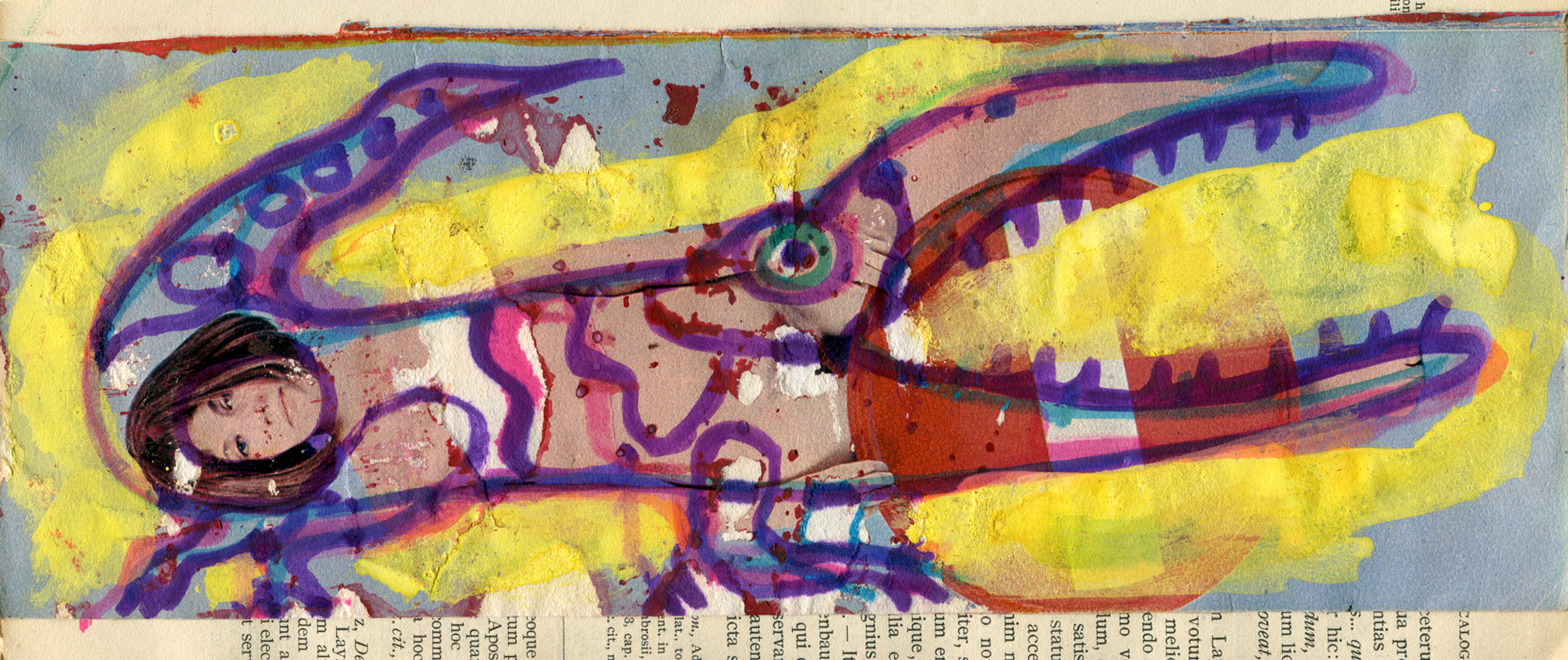
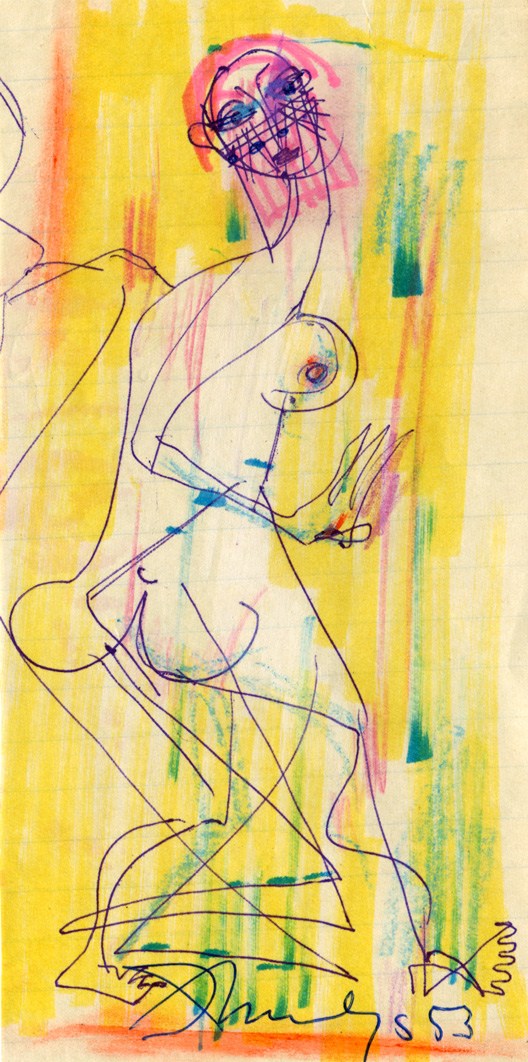
This collection of over 1,000 sketches, gathered from diaries, sketchbooks, and loose sheets, offers an intimate glimpse into his artistic process and creative development. Despite their modest scale, with the largest no larger than a standard school notebook, these sketches are rich with ideas that often served as the foundation for his paintings.
Why focus on these sketches?
Long overshadowed by his older brother Constant, Jan Nieuwenhuys built a visual language of his own, animals, dreamlike figures, and hybrid creatures drawn from children's imagery and primitive art, worked and reworked at the smallest possible scale. His paintings are only part of the story. These sketches are the visual diary behind them: the place where his exploration, experimentation, and evolution as an artist actually happened, unfiltered by any group's expectations.
This collection provides an unfiltered view of Nieuwenhuys' working process. It allows us to trace the origins of his expressive vision while also highlighting creative paths that remained on paper. Each sketch offers a candid look into his artistic thinking and serves as a testament to the importance of the small and spontaneous.
A Space for Experimentation
Having broken from CoBrA precisely because he refused to let aesthetics calcify, Nieuwenhuys kept working the way he always had: spontaneously, on whatever scale was at hand. His sketches reflect that refusal directly, small in size, uncompromising in intent.
This site is a visual archive of that process, and an invitation to look past the more famous name in the family and engage with the depth and vitality of Jan Nieuwenhuys' own small-scale work.